
Car policy confusing? Ask Poli.
I got rear-ended at a red light — whose insurance pays?
Say you're stopped at a red light and the car behind you rolls into your bumper. The other driver's liability coverage is usually the first place the repair bill goes — your own policy has backups if they have no insurance or won't pay.
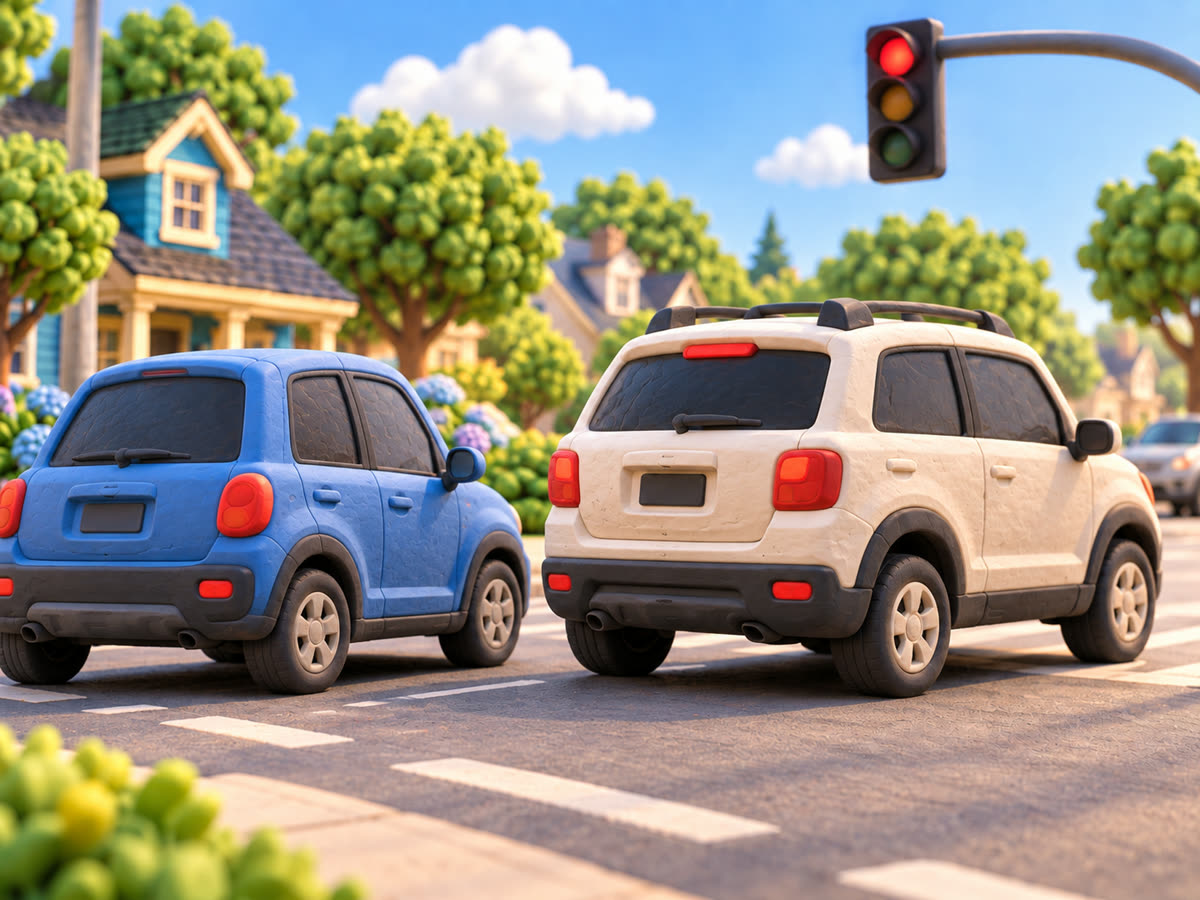
1. Stopped at the light
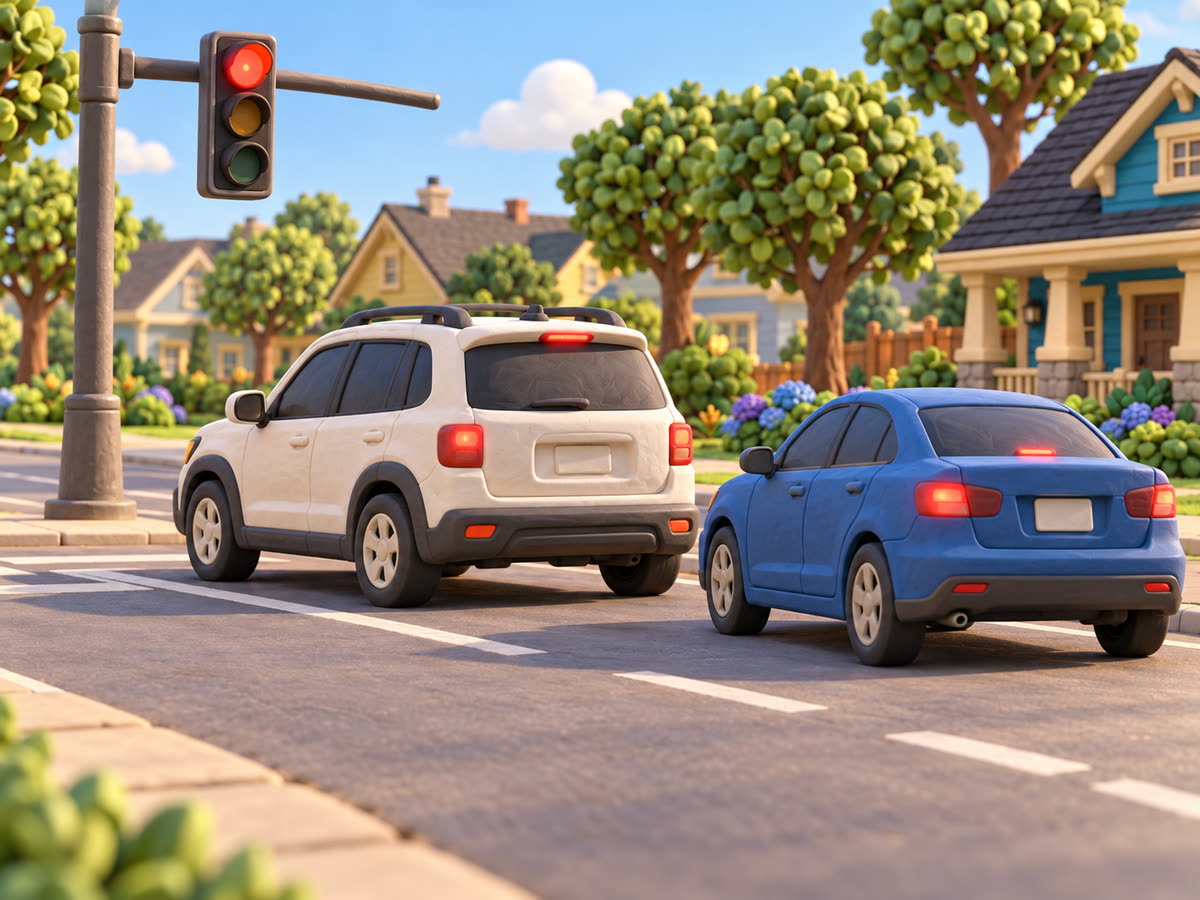
2. A car comes up too fast
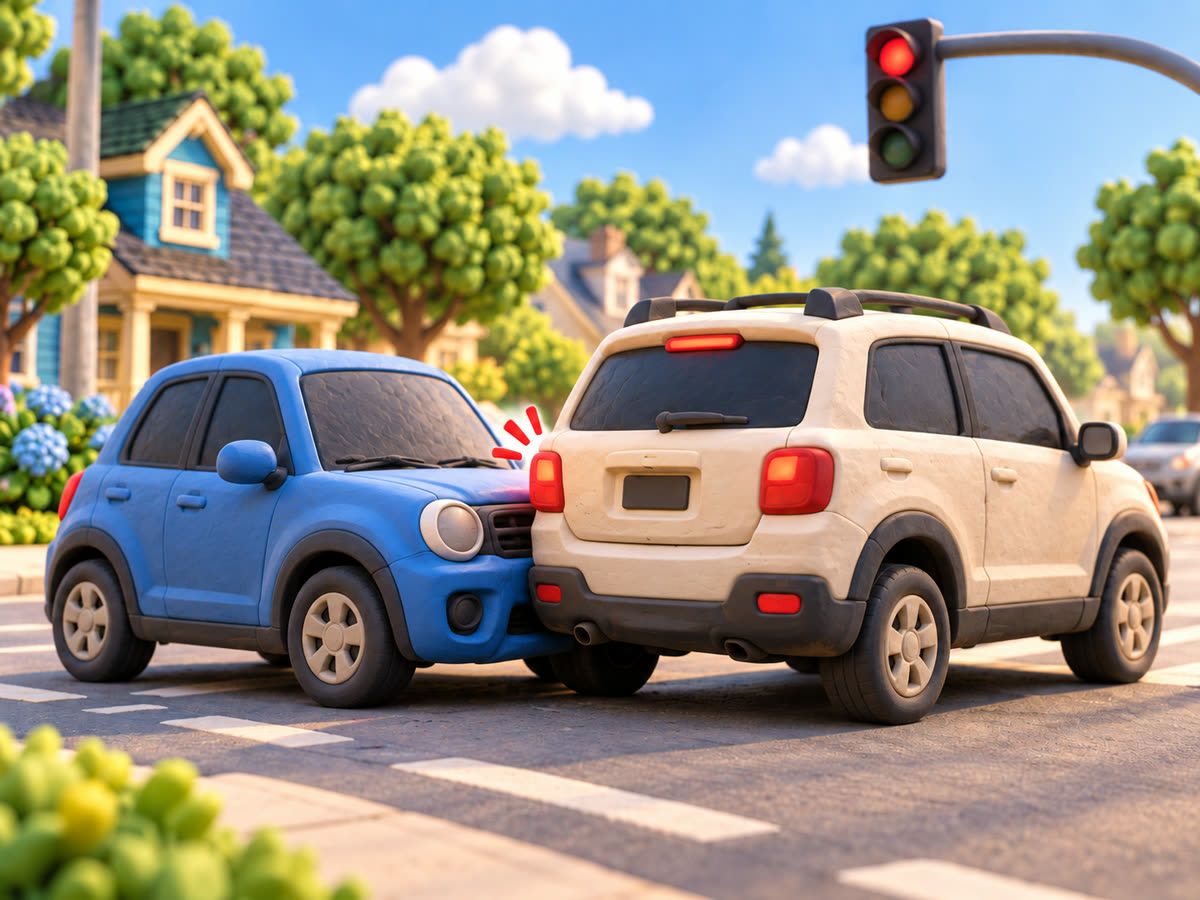
3. Bump from behind
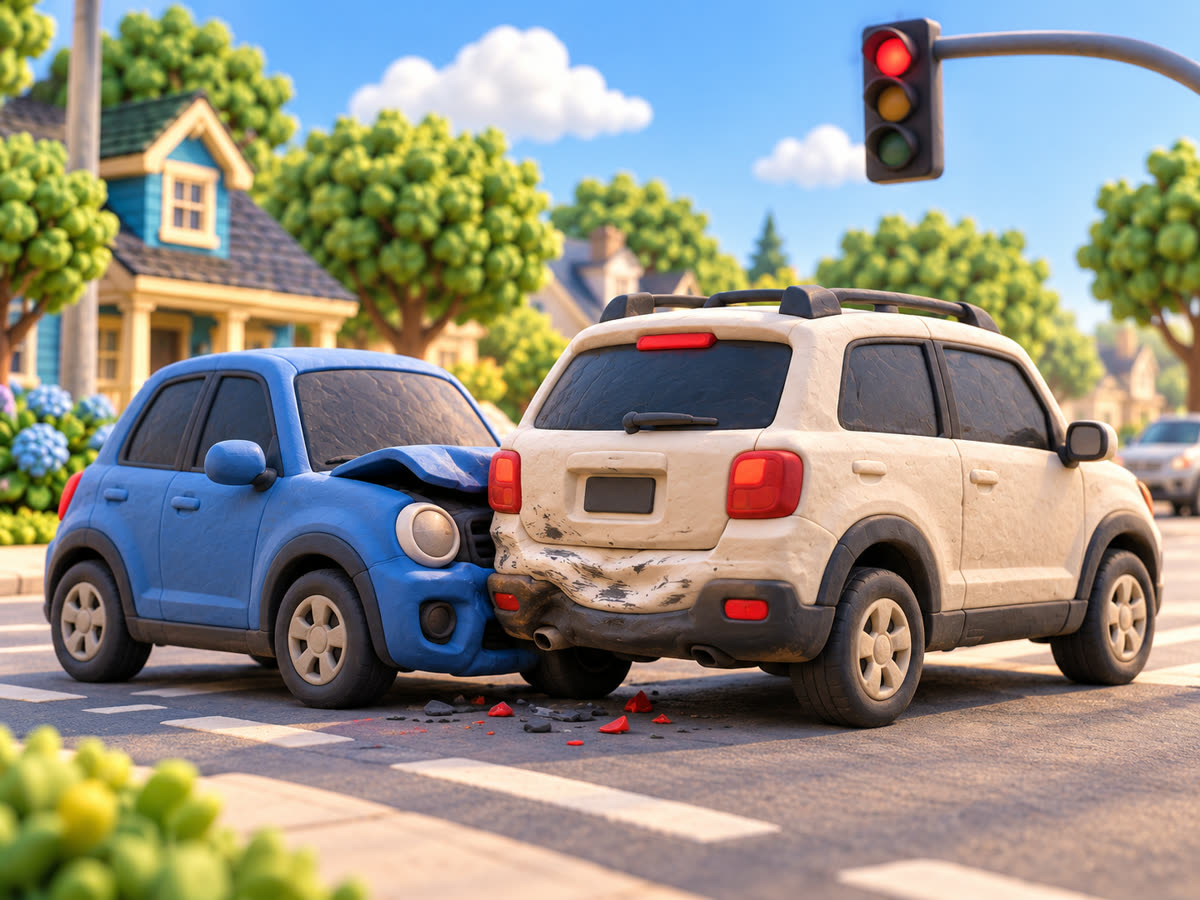
4. The damage
What filed auto forms generally say
When another driver hits you, their liability coverage is normally what pays for your repairs and injuries. You don't usually pay your own deductible if their company accepts the claim.
If you'd rather not wait on the other company, your own collision coverage can pay first. Your deductible applies, and your company may try to get it back from the other driver's company later.
If the other driver has no insurance or drives off, uninsured motorist coverage on your policy may step in — depending on what you bought and your state's rules.
Why your policy can still say something else
Whether you carry collision, uninsured motorist property damage, or a deductible waiver for not-at-fault accidents is set on your own policy page. State rules on fault also change how this plays out.
Clauses to look for in your own document
- Part A — Liability Coverage
- Part C — Uninsured Motorists Coverage
- Part D — Collision Coverage
- Our Right to Recover Payment
Auto policies differ. Upload yours and Poli will show you the actual clause.
Then ask Poli: “I was rear-ended at a red light. What does my policy say?”
Free · no account · nothing stored.
Read my auto policyMore auto questions
PoliSays explains document wording. It is not an insurer, broker, or law firm, and nothing here is advice.